Ankle Posterior Drawer Test Special Test
Orthopedic Physical Examination & Clinical Assessment Guide
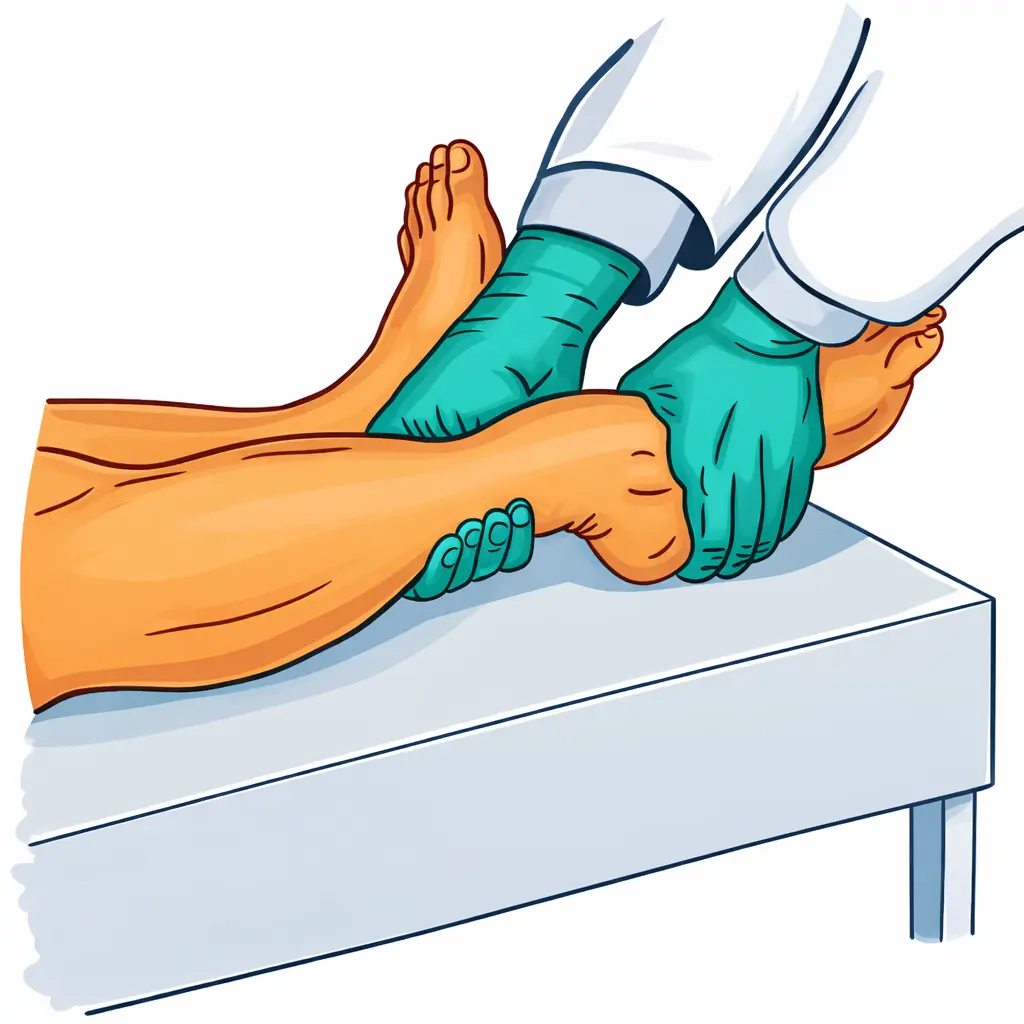
What is it used for?
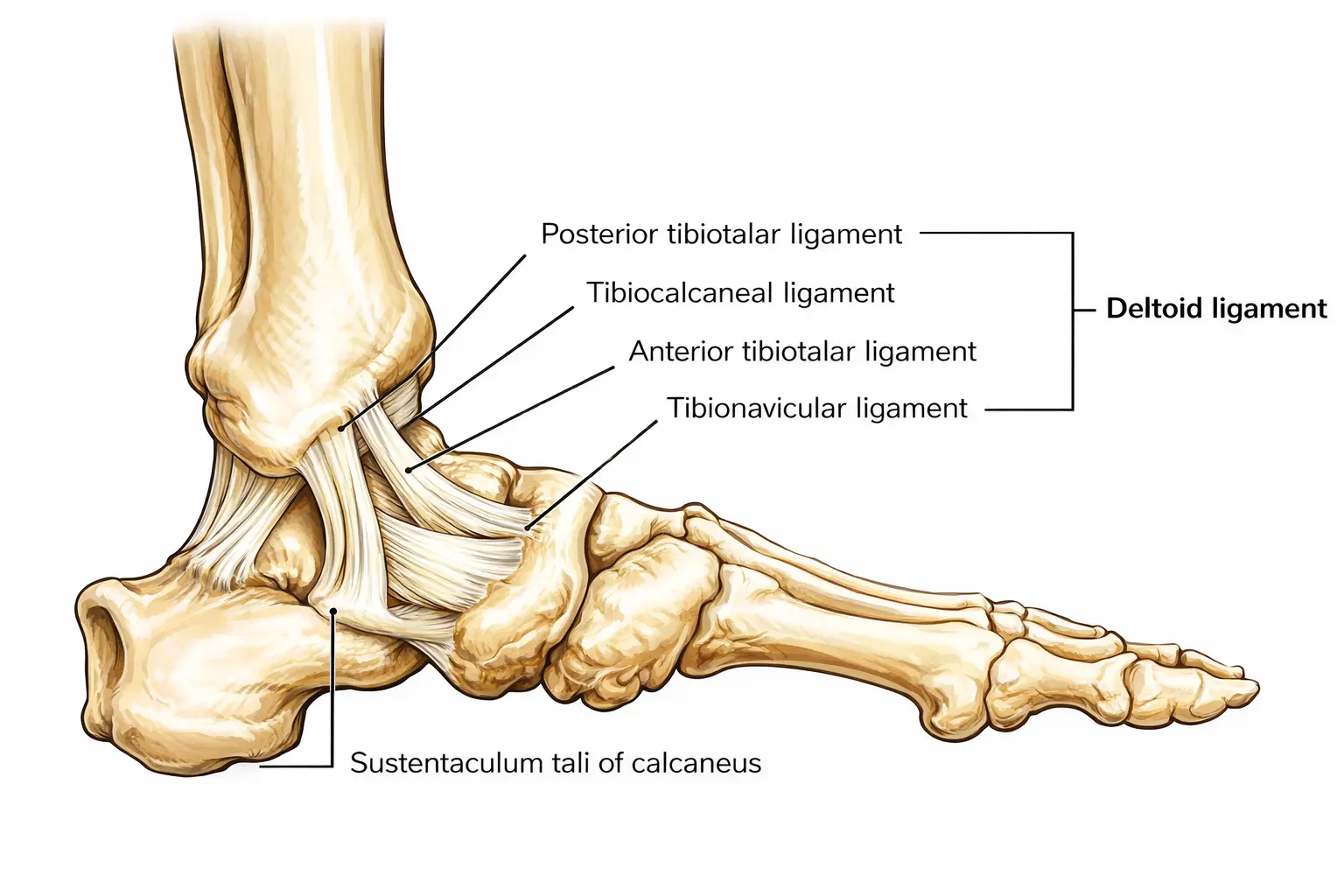
- Assessing the Posterior Talofibular Ligament (PTFL) and posterior instability.
How to Perform
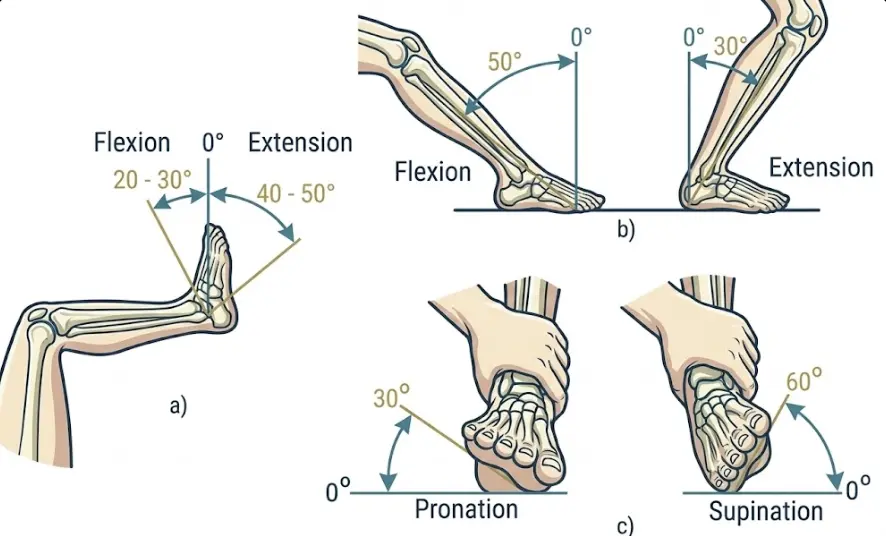
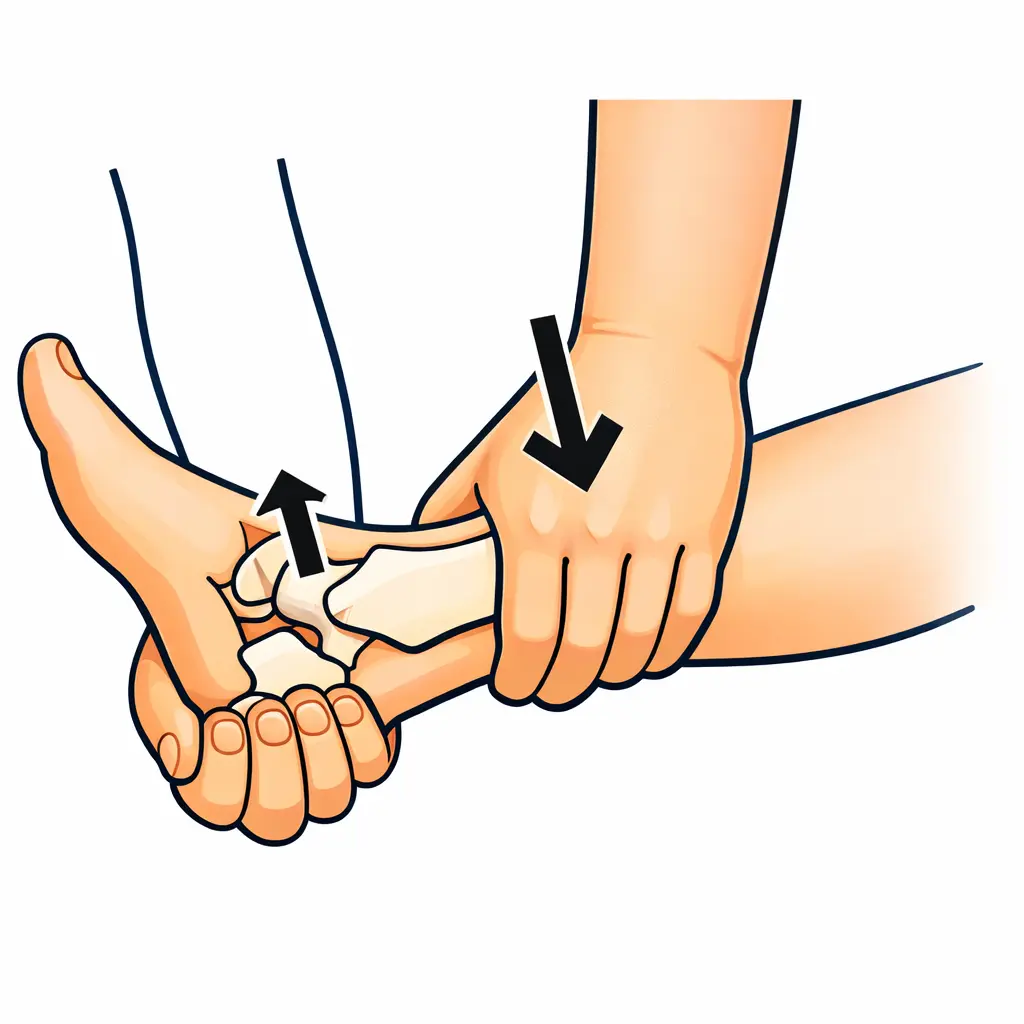
- Position: Patient lies supine. Foot is relaxed in slight plantar flexion (20°).
- Stabilization: Hold the lower leg (tibia/fibula) steady.
- Action: Grasp the heel (calcaneus) and push it backward (posteriorly) and downwards.
Interpretation of Results
- Positive Test: Excessive backward movement of the foot.
- Signs: A "clunk" or suction sign may be felt/seen if the ligament is ruptured.
Clinical Context & Limitations
The Ankle Posterior Drawer Test should be considered as one component of a comprehensive musculoskeletal assessment. No single special test has perfect diagnostic accuracy; thus, clinical decision-making should integrate test results with patient-reported symptoms, mechanism of injury, functional impairment, and relevant imaging.
Clinicians should be aware of potential false-positive results in patients with pain sensitisation, muscle guarding, or poor relaxation. For the Ankle & Foot region, combining the Ankle Posterior Drawer Test with complementary examination tests significantly improves overall diagnostic confidence.
References
- Magee, D. J. (2021). Orthopedic Physical Assessment (7th ed.). Elsevier.