Ankle & Foot
Muscle & Tendon
Evidence: confirmed
Arc Sign Special Test
Orthopedic Physical Examination & Clinical Assessment Guide
What is it used for?
- Differentiating between Achilles Tendinosis (tendon degeneration) and Paratendonitis (inflammation of the sheath).
How to Perform
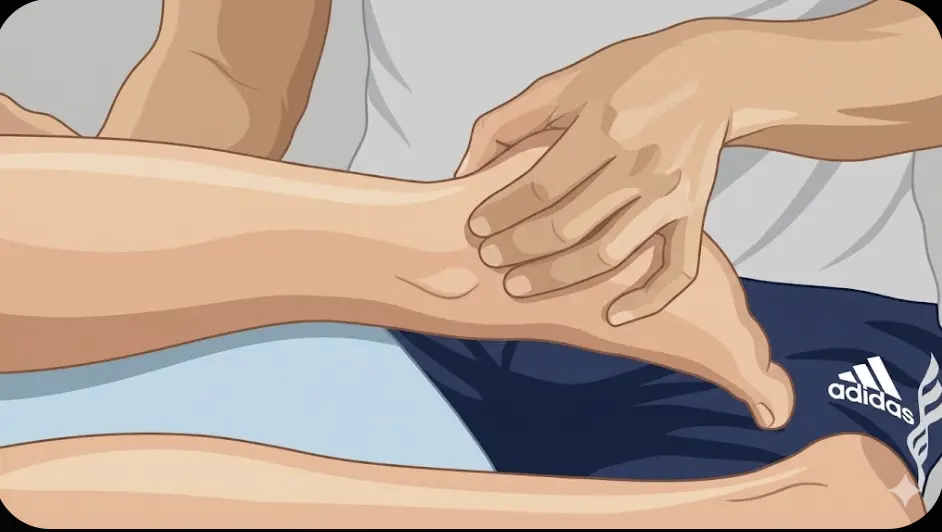
- Position: Patient lies prone.
- Action: Identify an area of localized swelling on the Achilles tendon.
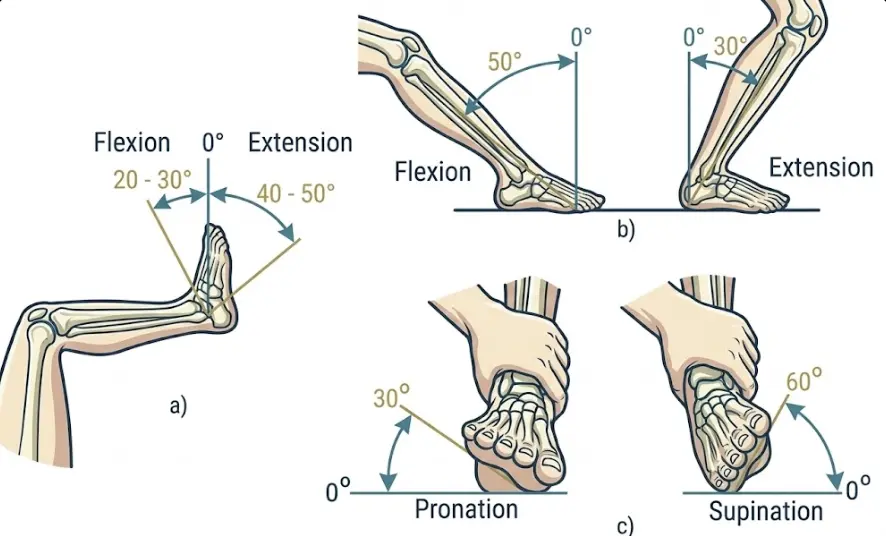
- Movement: Ask the patient to actively dorsiflex and plantarflex the ankle.
Interpretation of Results
- Tendinosis (Positive Arc): The swelling moves up and down with the tendon movement.
- Paratendonitis: The swelling/thickening remains stationary while the tendon glides inside it.
Diagnostic Accuracy
- Sensitivity: 52%
- Specificity: 83%
Clinical Context & Limitations
The Arc Sign should be considered as one component of a comprehensive musculoskeletal assessment. No single special test has perfect diagnostic accuracy; thus, clinical decision-making should integrate test results with patient-reported symptoms, mechanism of injury, functional impairment, and relevant imaging.
Clinicians should be aware of potential false-positive results in patients with pain sensitisation, muscle guarding, or poor relaxation. For the Ankle & Foot region, combining the Arc Sign with complementary examination tests significantly improves overall diagnostic confidence.
References
- Magee, D. J. (2021). Orthopedic Physical Assessment (7th ed.). Elsevier.