Spine
Neurological
Evidence: confirmed
Babinski Sign Special Test
Orthopedic Physical Examination & Clinical Assessment Guide
What is it used for?
- Screening for Upper Motor Neuron Lesions (CNS pathology).
How to Perform
- Action: Run a blunt object along the lateral border of the foot, curving across the metatarsal heads.
Interpretation of Results
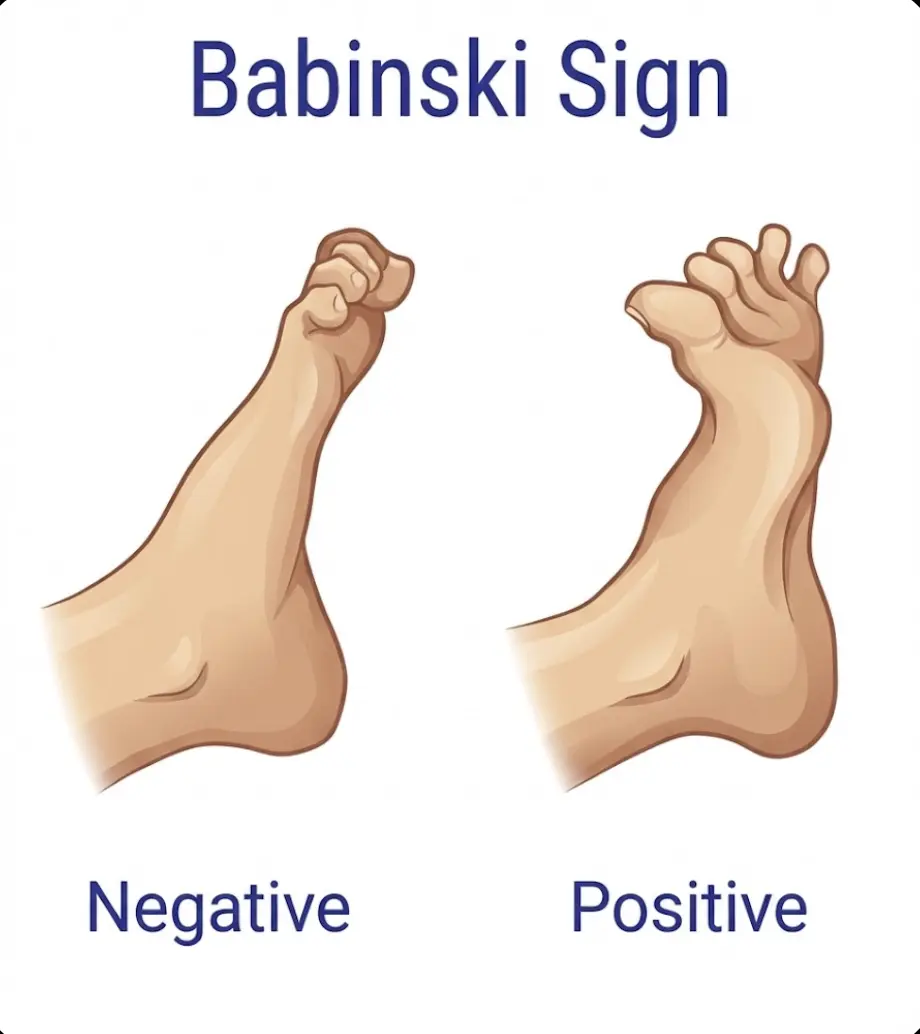
- Normal: Toes curl downward (flexion).
- Positive: Big toe extends (goes up) and other toes fan out.
Diagnostic Accuracy
- Specificity: 99% (Highly indicative of CNS problem in adults).
Clinical Context & Limitations
The Babinski Sign should be considered as one component of a comprehensive musculoskeletal assessment. No single special test has perfect diagnostic accuracy; thus, clinical decision-making should integrate test results with patient-reported symptoms, mechanism of injury, functional impairment, and relevant imaging.
Clinicians should be aware of potential false-positive results in patients with pain sensitisation, muscle guarding, or poor relaxation. For the Spine region, combining the Babinski Sign with complementary examination tests significantly improves overall diagnostic confidence.
References
- Magee, D. J. (2021). Orthopedic Physical Assessment.