Elbow
Ligamentous Instability (Lateral)
Evidence: confirmed
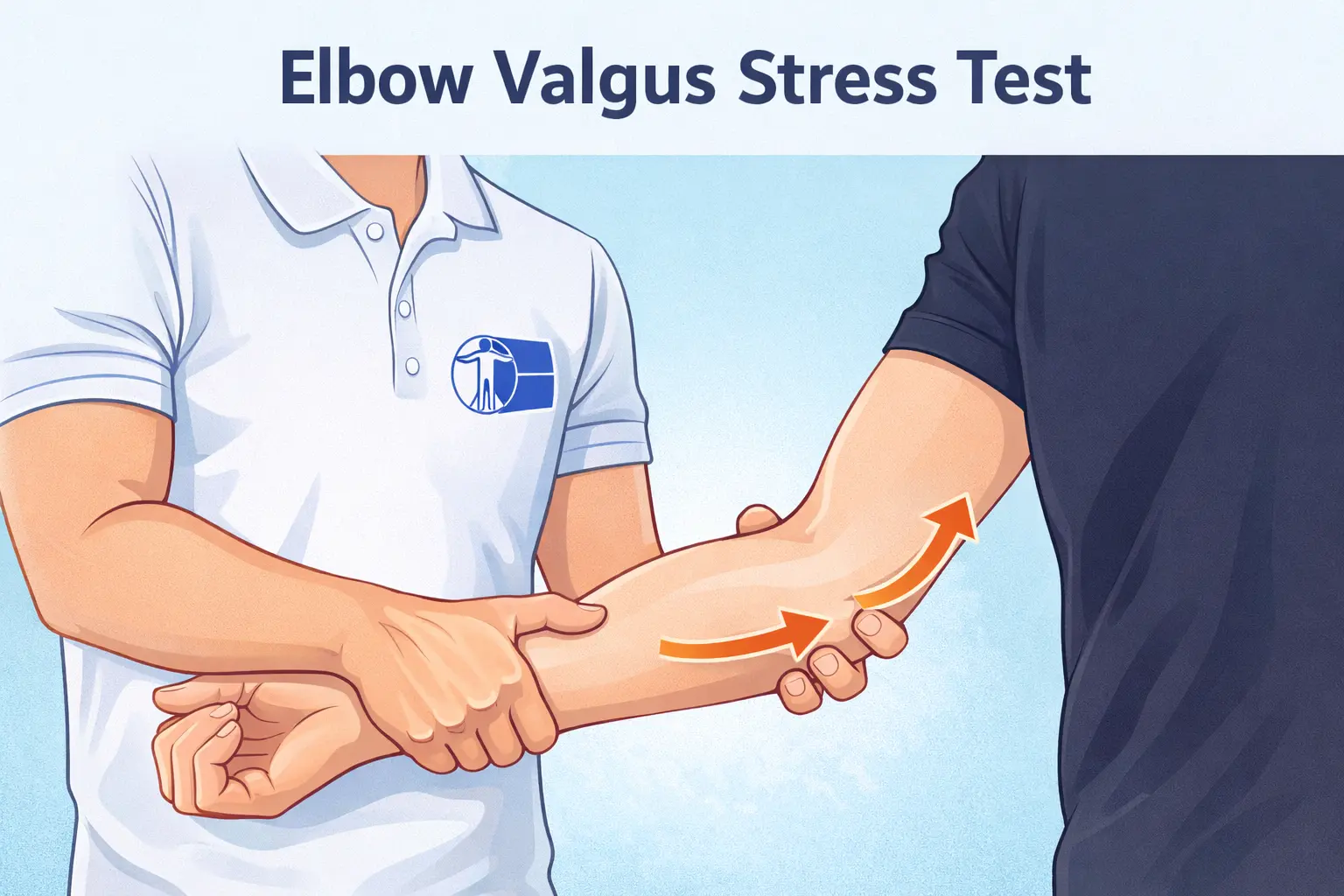
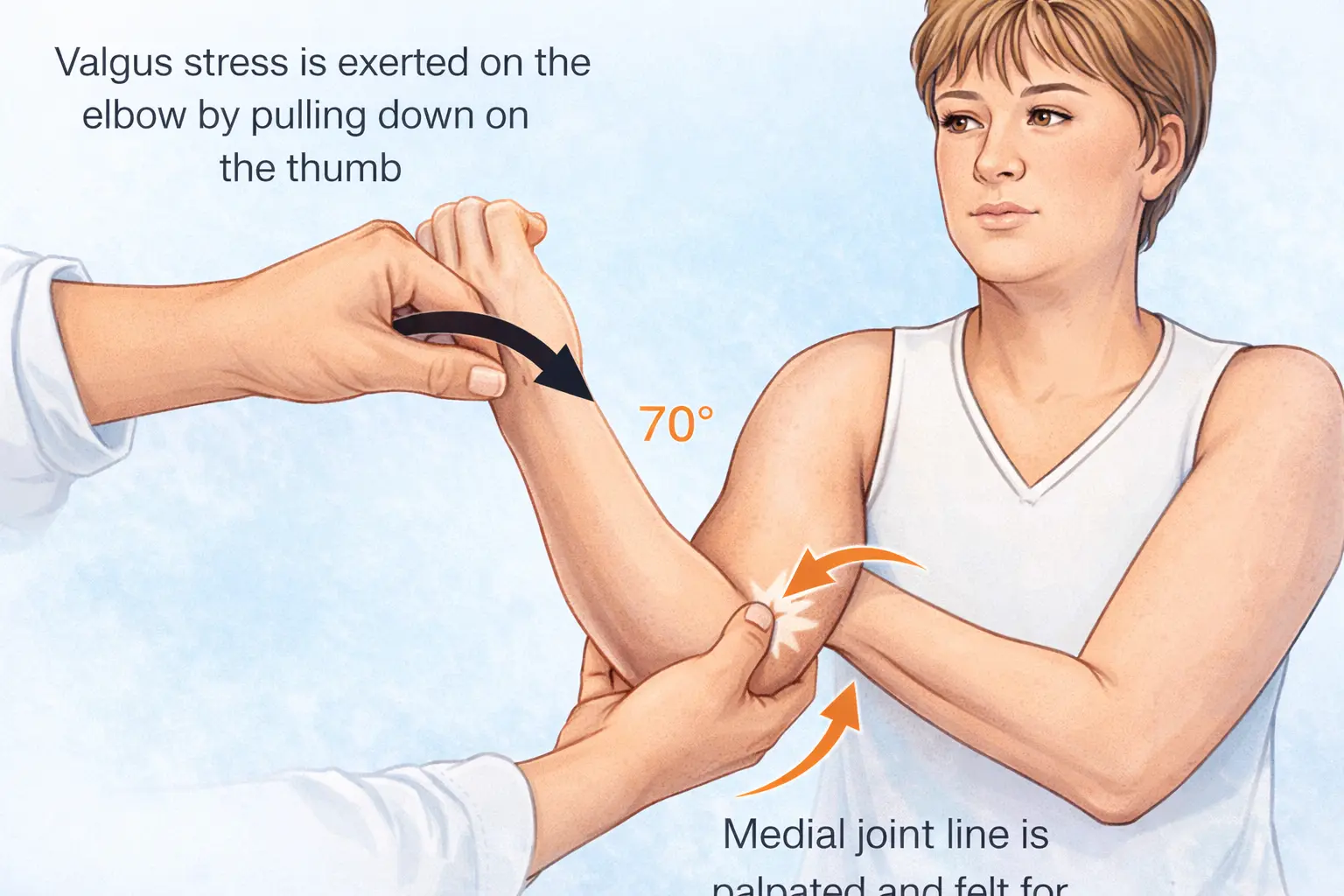
Elbow Varus Stress Test Special Test
Orthopedic Physical Examination & Clinical Assessment Guide
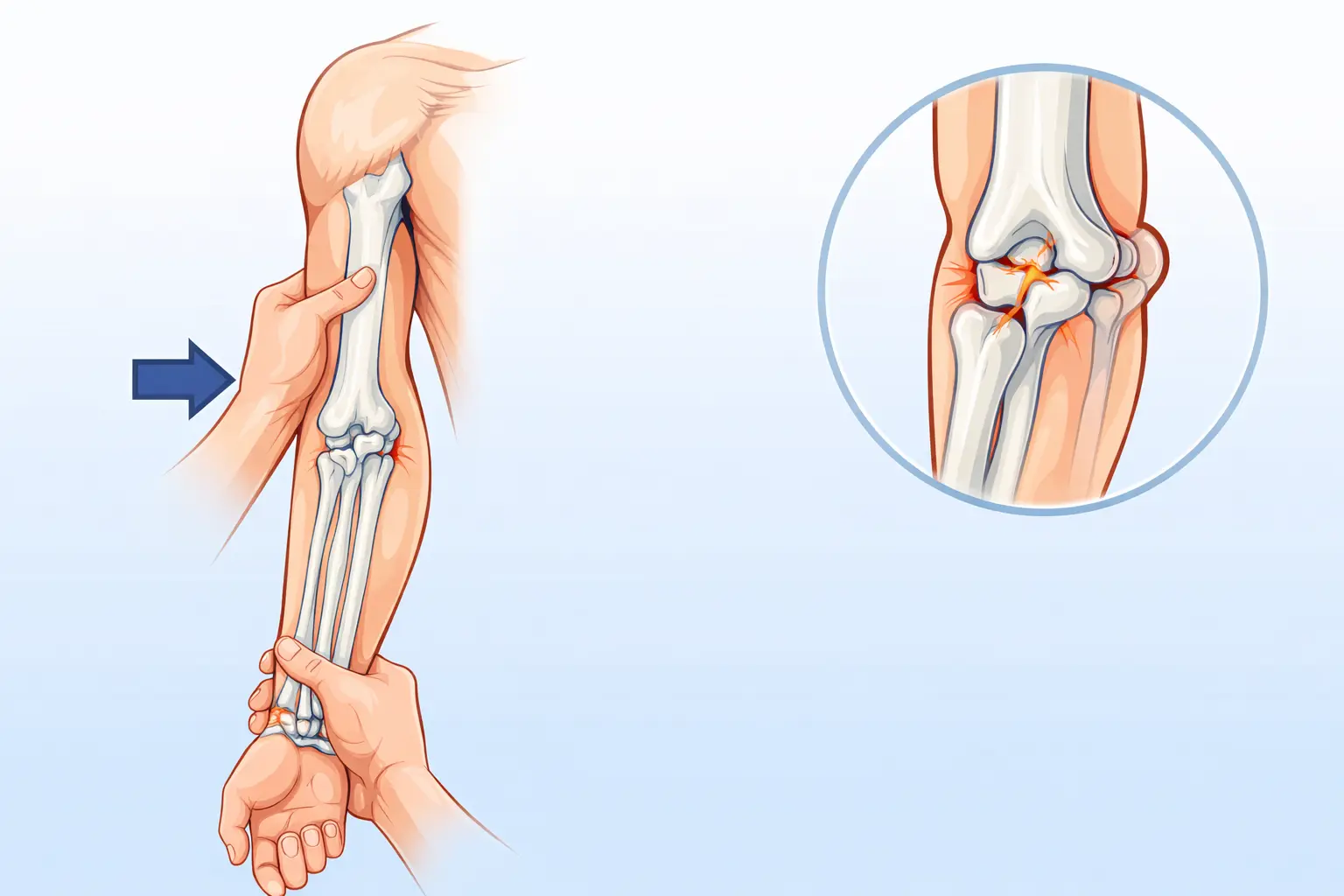
What is it used for?
- Assessing the integrity of the Lateral Collateral Ligament (LCL) complex.
How to Perform
- Position: Patient sits with elbow flexed to 20-30° to unlock the olecranon.
- Action: Stabilize the humerus with one hand and apply a varus (outward) force to the forearm with the other.
Interpretation of Results
- Positive Test: Pain on the lateral aspect or excessive gapping (laxity) compared to the uninjured side.
Diagnostic Accuracy
- Sensitivity: Moderate (Best for acute injuries).
Clinical Context & Limitations
The Elbow Varus Stress Test should be considered as one component of a comprehensive musculoskeletal assessment. No single special test has perfect diagnostic accuracy; thus, clinical decision-making should integrate test results with patient-reported symptoms, mechanism of injury, functional impairment, and relevant imaging.
Clinicians should be aware of potential false-positive results in patients with pain sensitisation, muscle guarding, or poor relaxation. For the Elbow region, combining the Elbow Varus Stress Test with complementary examination tests significantly improves overall diagnostic confidence.
References
- Magee, D. J. (2021). Orthopedic Physical Assessment.