Lunotriquetral Ballottement Test Special Test
Orthopedic Physical Examination & Clinical Assessment Guide
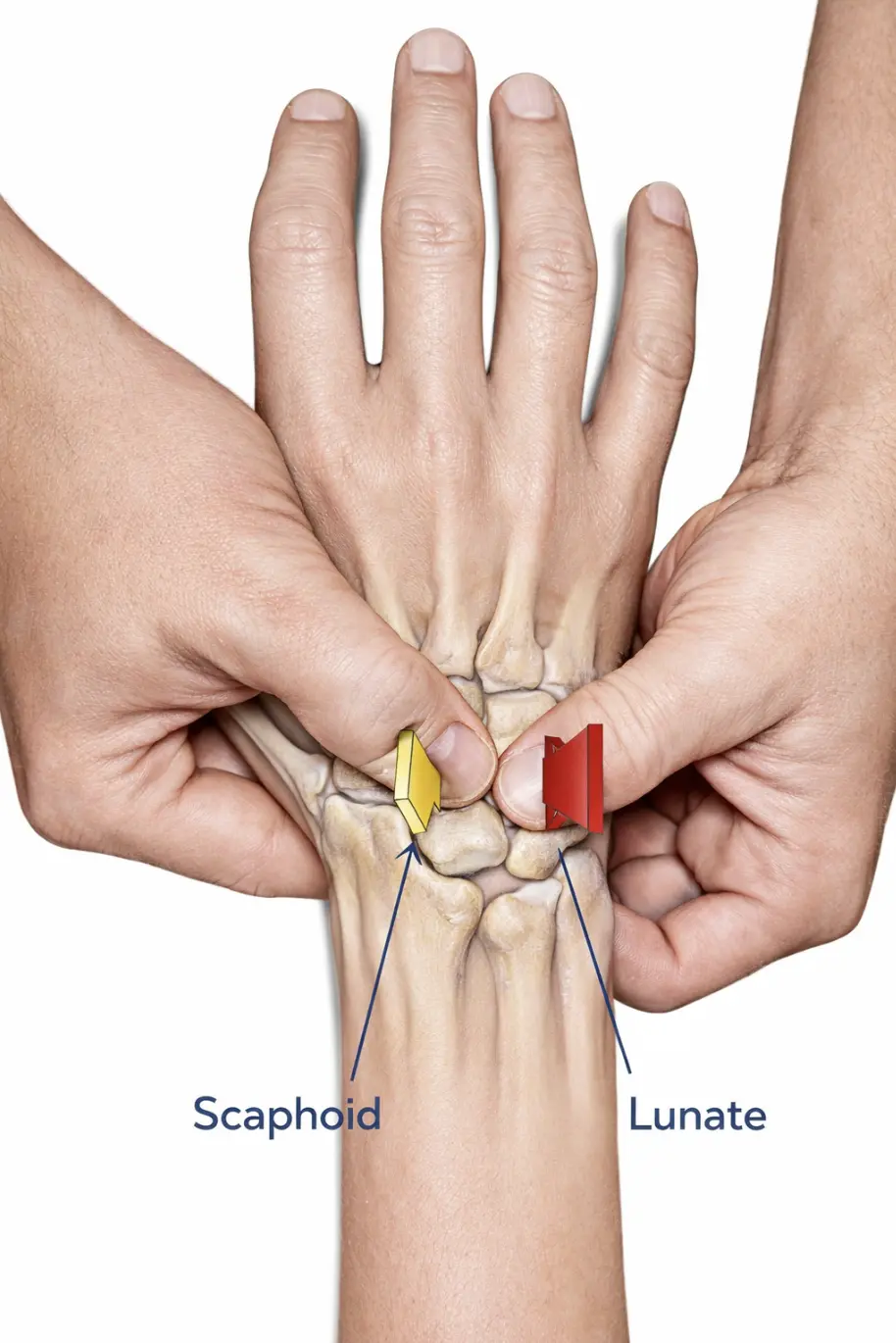
What is it used for?
- Assessing instability of the Lunotriquetral Ligament.
How to Perform
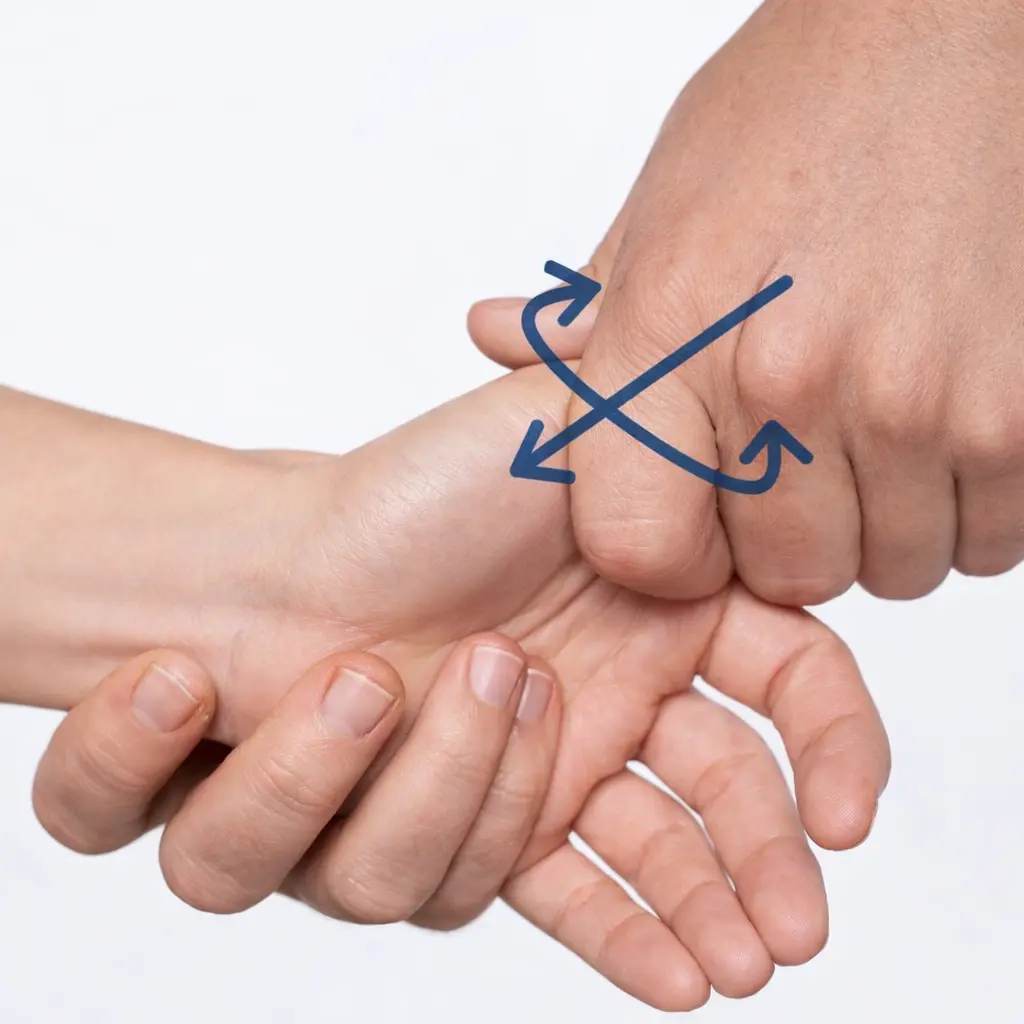
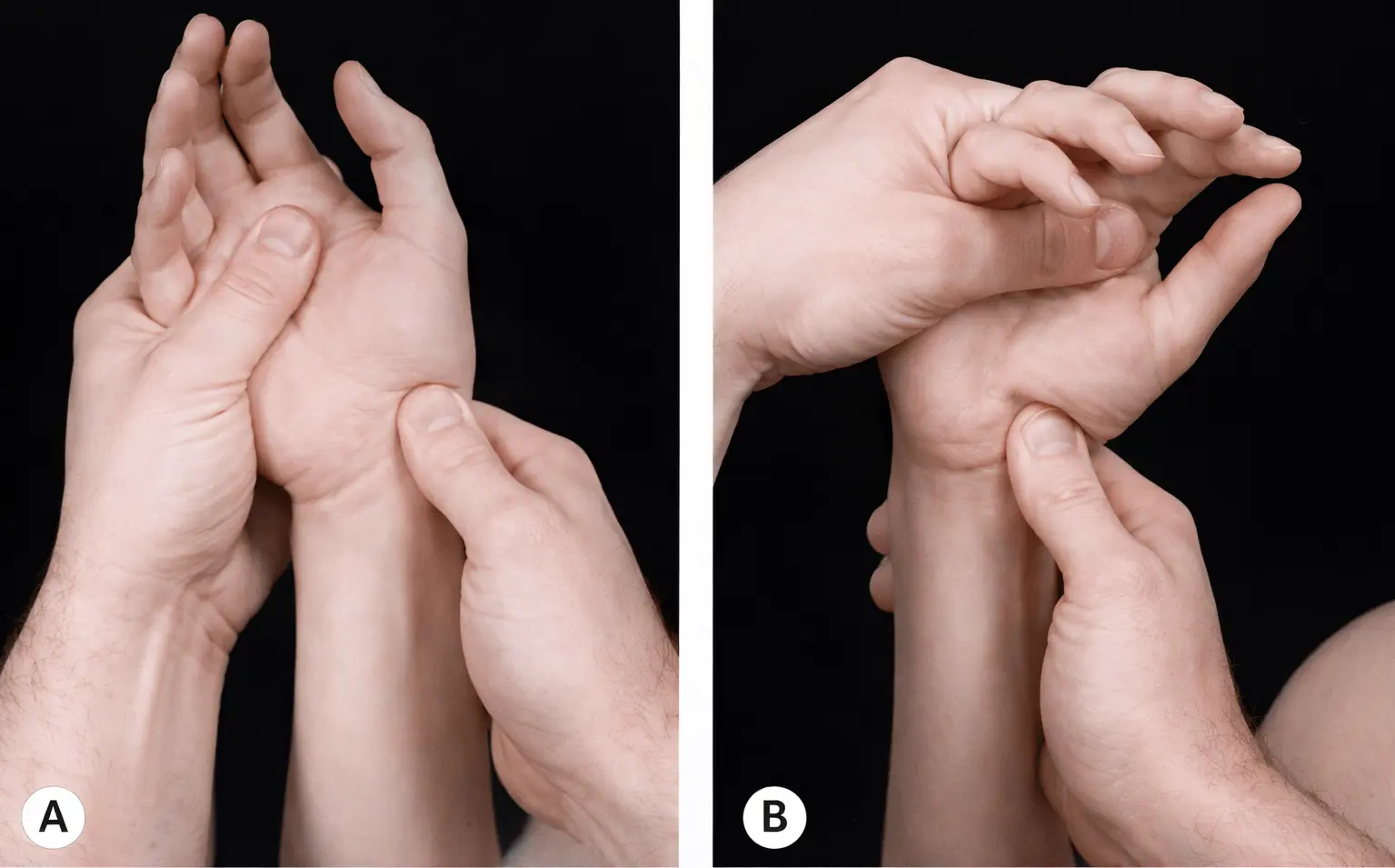
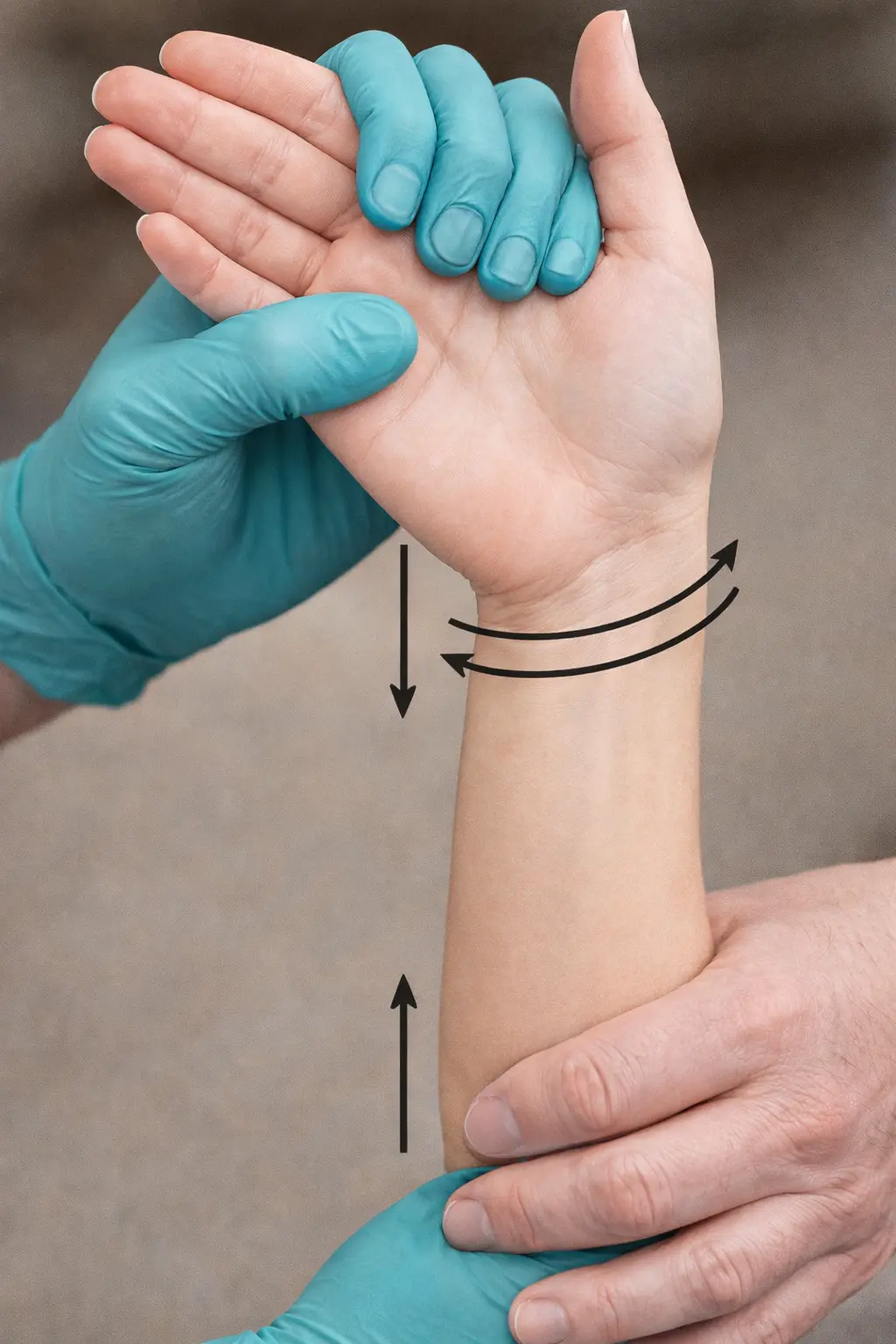
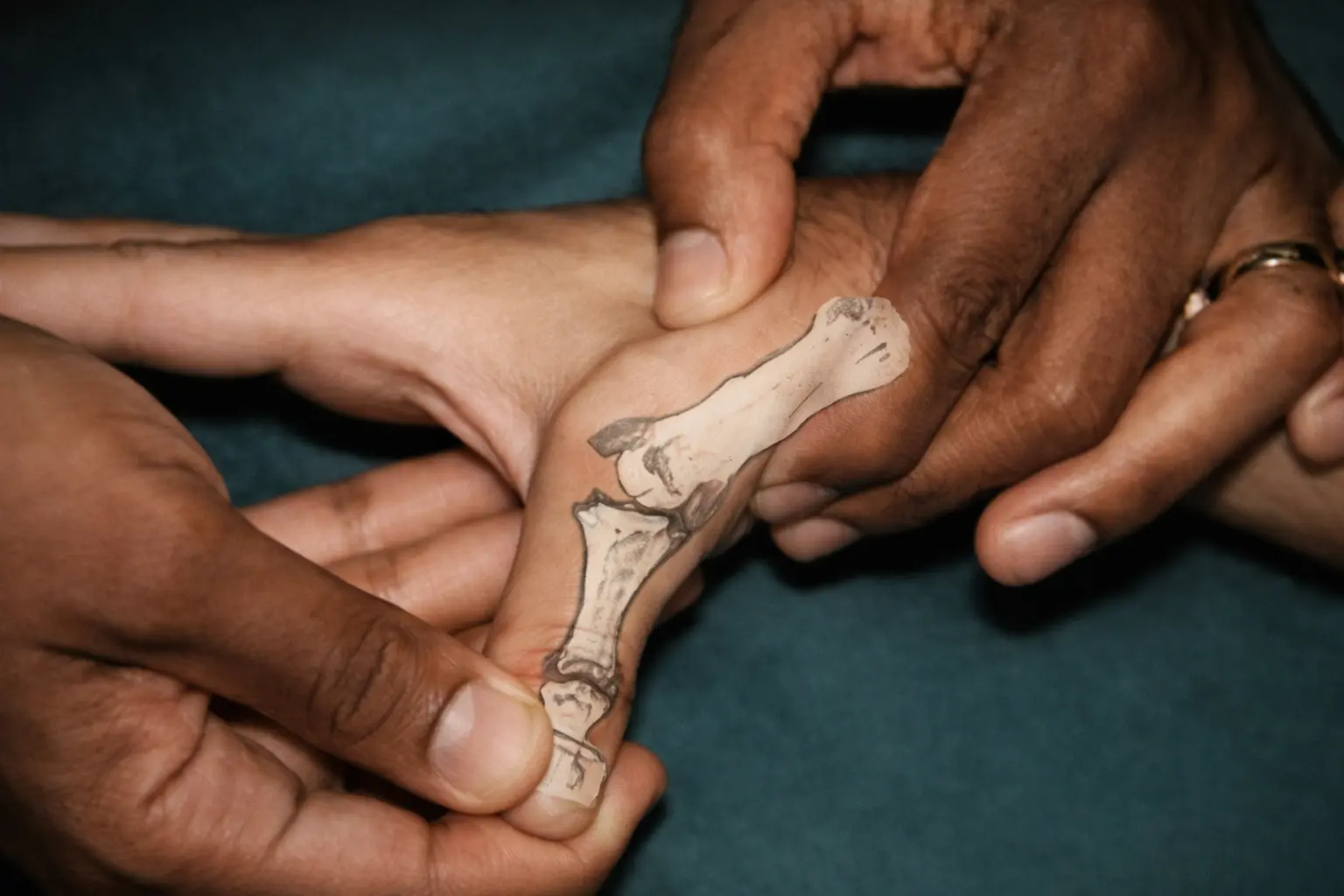
- Position: Examiner stabilizes the lunate with the thumb and index finger of one hand.
- Action: Grasp the triquetrum/pisiform with the other hand and shear it anteriorly and posteriorly against the lunate.
Interpretation of Results
- Positive Test: Pain, laxity, or crepitus compared to the unaffected side.
- Why: The shearing force stresses the ligament directly.
Diagnostic Accuracy
- Sensitivity: 64%
- Specificity: 44%
Clinical Context & Limitations
The Lunotriquetral Ballottement Test should be considered as one component of a comprehensive musculoskeletal assessment. No single special test has perfect diagnostic accuracy; thus, clinical decision-making should integrate test results with patient-reported symptoms, mechanism of injury, functional impairment, and relevant imaging.
Clinicians should be aware of potential false-positive results in patients with pain sensitisation, muscle guarding, or poor relaxation. For the Wrist & Hand region, combining the Lunotriquetral Ballottement Test with complementary examination tests significantly improves overall diagnostic confidence.