Peroneal Tendon Dislocation Test Special Test
Orthopedic Physical Examination & Clinical Assessment Guide
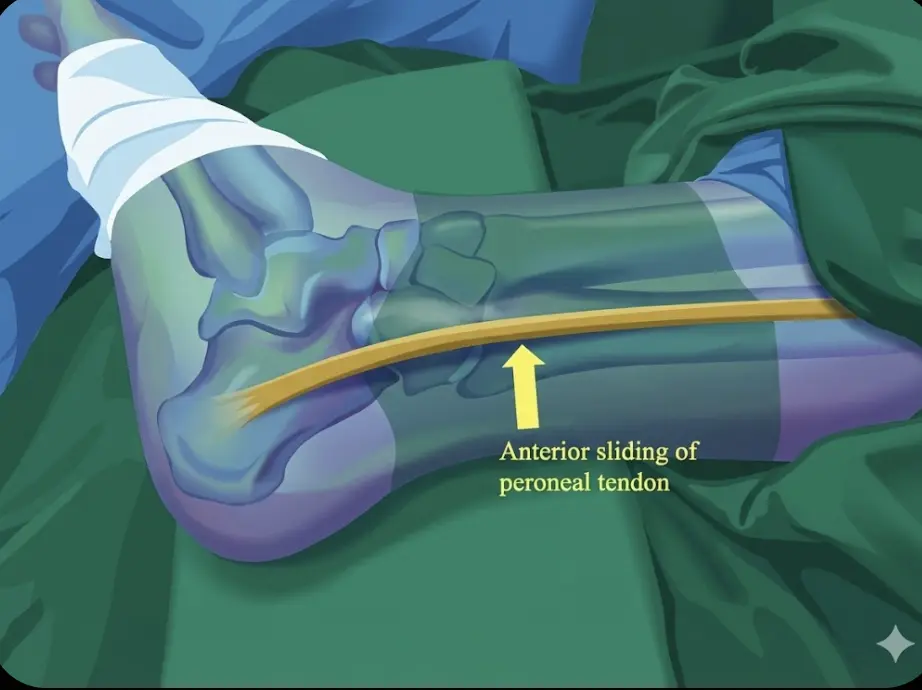
What is it used for?
- Diagnosing Peroneal Tendon Subluxation or Dislocation (Snapping Ankle).
How to Perform
- Position: Patient lies prone with the knee bent to 90°.
- Action: Ask the patient to actively pull the foot up and out (Dorsiflexion + Eversion).
- Resistance: Apply resistance to this movement while observing the area behind the lateral malleolus (outer ankle bone).
Interpretation of Results
- Positive Test: The tendons snap or pop out from behind the malleolus, often accompanied by pain or apprehension.
Clinical Context & Limitations
The Peroneal Tendon Dislocation Test should be considered as one component of a comprehensive musculoskeletal assessment. No single special test has perfect diagnostic accuracy; thus, clinical decision-making should integrate test results with patient-reported symptoms, mechanism of injury, functional impairment, and relevant imaging.
Clinicians should be aware of potential false-positive results in patients with pain sensitisation, muscle guarding, or poor relaxation. For the Ankle & Foot region, combining the Peroneal Tendon Dislocation Test with complementary examination tests significantly improves overall diagnostic confidence.
References
- Magee, D. J. (2021). Orthopedic Physical Assessment (7th ed.). Elsevier.
- Miller, M. D. (2020). Miller's Review of Orthopaedics (8th ed.). Elsevier.